
An ongoing crypto mining campaign has upgraded its arsenal while
adding new defense evasion tactics that enable the threat actors to
conceal the intrusions and fly under the radar, new research
published today has revealed.
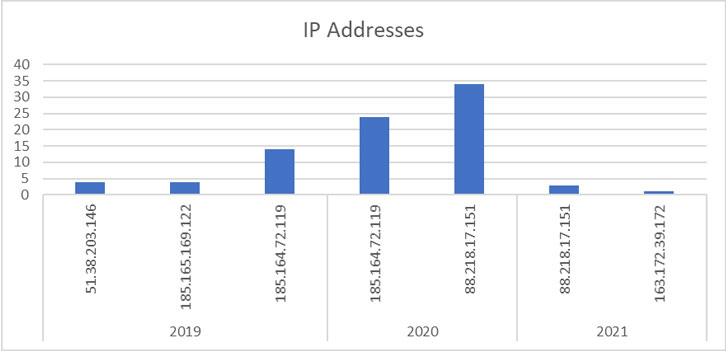
Since first detected in 2019, a total of 84 attacks against its
honeypot servers have been recorded to date, four of which
transpired in 2021, according to researchers from DevSecOps and
cloud security firm Aqua Security, who have been tracking the
malware operation for the past three years. That said, 125 attacks
have been spotted in the wild in the third quarter of 2021 alone,
signaling that the attacks have not slowed down.
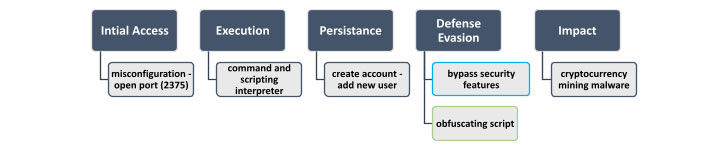
Initial attacks involved executing a malicious command upon
running a vanilla image named “alpine:latest” that resulted in the
download of a shell script named “autom.sh.”
“Adversaries commonly use vanilla images along with malicious
commands to perform their attacks, because most organizations trust
the official images and allow their use,” the researchers said[1]
in a report shared with The Hacker News. “Over the years, the
malicious command that was added to the official image to carry out
the attack has barely changed. The main difference is the server
from which the shell script autom.sh was downloaded.”
The shell script initiates the attack sequence, enabling the
adversary to create a new user account under the name “akay” and
upgrade its privileges to a root user, using which arbitrary
commands are run on the compromised machine with the goal of mining
cryptocurrency.
While early stages of the campaign in 2019 featured no special
techniques to hide the mining activity, later versions show the
extreme measures its developers have taken to keep it invisible to
detection and inspection, chief among them being the ability to
disable security mechanisms and retrieve an obfuscated mining shell
script that was Base64-encoded[2]
five times to get around security tools.
Malware campaigns carried out to hijack computers to mine
cryptocurrencies have been dominated by multiple threat actors such
as Kinsing[3], which has been found
scanning the internet for misconfigured Docker servers[4] to break into the
unprotected hosts and install a previously undocumented coin miner
strain.
On top of that, a hacking group named TeamTNT[5]
has been observed[6]
striking[7]
unsecured Redis database servers, Alibaba Elastic Computing Service
(ECS[8]) instances, exposed
Docker APIs, and vulnerable Kubernetes clusters in order to execute
malicious code with root privileges on the targeted hosts as well
as deploy cryptocurrency-mining payloads and credential stealers.
In addition, compromised Docker Hub accounts[9] have also been employed
to host malicious images that were then used to distribute
cryptocurrency miners.
In recent weeks, security flaws in the Log4j logging library[10] as well as vulnerabilities[11] recently uncovered in
Atlassian Confluence, F5 BIG-IP, VMware vCenter, and Oracle
WebLogic Servers have been abused to take over machines to mine
cryptocurrencies, a scheme known as cryptojacking. Earlier this
month, network-attached storage (NAS) appliance maker QNAP warned[12] of cryptocurrency
mining malware targeting its devices that could occupy around 50%
of the total CPU usage.
“Miners are a low-risk way for cybercriminals to turn a
vulnerability into digital cash, with the greatest risk to their
cash flow being competing miners discovering the same vulnerable
servers,” Sophos senior threat researcher Sean Gallagher noted[13] in an analysis of a
Tor2Mine mining campaign, which involves the use of a PowerShell
script to disable malware protection, execute a miner payload, and
harvest Windows credentials.
“The Autom campaign illustrates that attackers are becoming more
sophisticated, continually improving their techniques and their
ability to avoid detection by security solutions,” the researchers
said. To protect against these threats, it’s recommended to monitor
suspicious container activity, perform dynamic image analysis, and
routinely scan the environments for misconfiguration issues.
References
- ^
said
(blog.aquasec.com) - ^
Base64-encoded
(en.wikipedia.org) - ^
Kinsing
(blog.aquasec.com) - ^
misconfigured Docker servers
(www.trendmicro.com) - ^
TeamTNT
(malpedia.caad.fkie.fraunhofer.de) - ^
observed
(www.trendmicro.com) - ^
striking
(www.trendmicro.com) - ^
ECS
(www.trendmicro.com) - ^
compromised Docker Hub accounts
(www.trendmicro.com) - ^
Log4j
logging library (thehackernews.com) - ^
vulnerabilities
(www.trendmicro.com) - ^
warned
(thehackernews.com) - ^
noted
(news.sophos.com)
Read more https://thehackernews.com/2021/12/ongoing-autom-cryptomining-malware.html