A new ransomware family that emerged last month comes with its
own bag of tricks to bypass ransomware protection by leveraging a
novel technique called “intermittent encryption.”
Called LockFile[1], the operators of the
ransomware have been found exploiting recently disclosed flaws such
as ProxyShell[2]
and PetitPotam[3]
to compromise Windows servers and deploy file-encrypting malware
that scrambles only every alternate 16 bytes of a file, thereby
giving it the ability to evade ransomware defences.
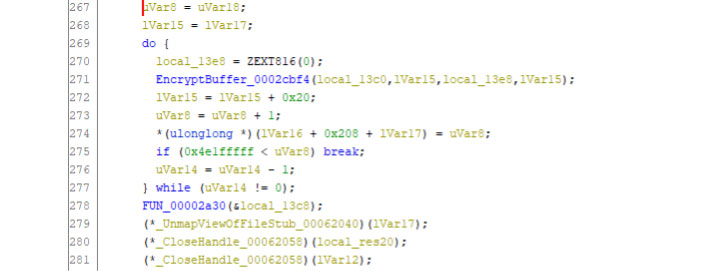
“Partial encryption is generally used by ransomware operators to
speed up the encryption process and we’ve seen it implemented by
BlackMatter, DarkSide and LockBit 2.0 ransomware,” Mark Loman,
Sophos director of engineering, said in a statement. “What sets
LockFile apart is that, unlike the others, it doesn’t encrypt the
first few blocks. Instead, LockFile encrypts every other 16 bytes
of a document.”
“This means that a file such as a text document remains
partially readable and looks statistically like the original. This
trick can be successful against ransomware protection software that
relies on inspecting content using statistical analysis to detect
encryption,” Loman added.
Sophos’ analysis of LockFile comes from an artifact[4]
that was uploaded to VirusTotal on August 22, 2021.
Once deposited, the malware also takes steps to terminate
critical processes associated with virtualization software and
databases via the Windows Management Interface (WMI), before
proceeding to encrypt critical files and objects, and display a
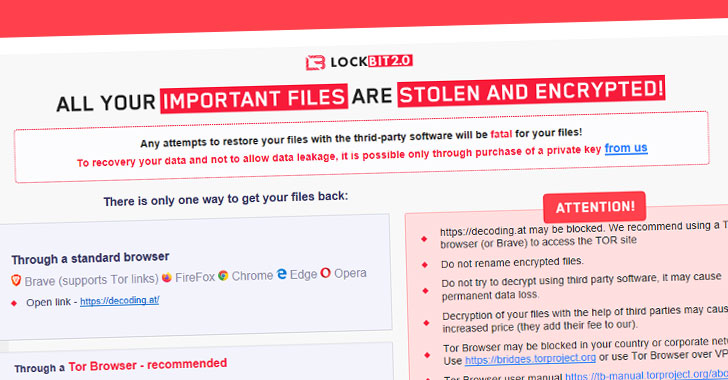
ransomware note that bears stylistic similarities with that of
LockBit 2.0.
The ransom note also urges the victim to contact a specific
email address “contact@contipauper.com,” which Sophos suspects
could be a derogatory reference to a competing ransomware group
called Conti.
What’s more, the ransomware deletes itself from the system post
successful encryption of all the documents on the machine, meaning
that “there is no ransomware binary for incident responders or
antivirus software to find or clean up.”
“The message here for defenders is that the cyberthreat
landscape never stands still, and adversaries will quickly seize
every possible opportunity or tool to launch a successful attack,”
Loman said.
The disclosure comes as the U.S. Federal Bureau of Investigation
(FBI) released a Flash report[5]
detailing the tactics of a new Ransomware-as-a-Service (RaaS)
outfit known as Hive, consisting of a number of actors who are
using multiple mechanisms to compromise business networks,
exfiltrate data and encrypt data on the networks, and attempt to
collect a ransom in exchange for access to the decryption
software.
References
- ^
LockFile
(news.sophos.com) - ^
ProxyShell
(thehackernews.com) - ^
PetitPotam
(thehackernews.com) - ^
artifact
(www.virustotal.com) - ^
Flash
report (www.ic3.gov)