
on millions of Dell laptops and PCs contains a security
vulnerability that could allow malicious software or rogue
logged-in users to escalate their privileges to administrator-level
and access sensitive information.
Discovered by security researchers at SafeBreach
Labs[1], the vulnerability,
identified as CVE-2019-12280, is a privilege-escalation issue and
affects Dell’s SupportAssist application for business PCs (version
2.0) and home PCs (version 3.2.1 and all prior versions).
Dell SupportAssist, formerly known as Dell System Detect, checks
the health of your system’s hardware and software, alerting
customers to take appropriate action to resolve them. To do so, it
runs on your computer with SYSTEM-level permissions.
With this high-level privileges, the utility interacts with the
Dell Support website and automatically detects Service Tag or
Express Service Code of your Dell product, scans the existing
device drivers and installs missing or available driver updates,
along with performing hardware diagnostic tests.
However, researchers at SafeBreach Labs discovered that the
software insecurely loads .dll files from user-controlled folders
when run, leaving a spot for malware and rogue logged-in users to
corrupt existing DLLs or replace them with malicious ones.
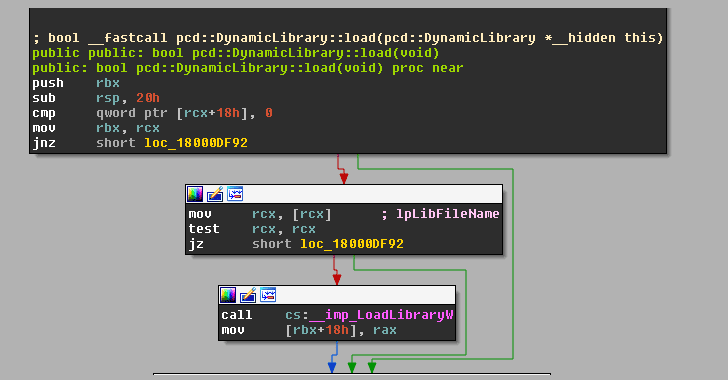
malicious code gets injected into the program and executed within
the context of an administrator, thus easily allowing the attacker
to gain complete control of a targeted system.
“According to Dell’s website, SupportAssist is pre-installed on
most of Dell devices running Windows. This means that as long as
the software is not patched, the vulnerability affects millions of
Dell PC users,” the researchers say.
only company whose PCs are impacted by this particular security
issue.
Since Dell SupportAssist is written and maintained by
Nevada-based diagnostics and customer support firm
PC-Doctor, other PC makers that bundle the same diagnostic
and troubleshooting tools into their own computers with different
names may also be vulnerable.
“After SafeBreach Labs sent the details to Dell, we discovered that
this vulnerability affects additional OEMs which use a rebranded
version of the PC-Doctor Toolbox for Windows software components,”
the researchers say.
over 100 million copies of PC-Doctor for Windows on computer
systems worldwide,” which means the flaw also affects other OEMs
that rely on PC-Doctor for specialized troubleshooting tools.
Since Dell’s SupportAssist software use a signed driver by
PC-Doctor to access low-level memory and hardware, researchers
demonstrated this vulnerability to read the content of an arbitrary
physical memory address as a proof-of-concept.
SafeBreach Labs reported the vulnerability to Dell on 29th April
2019, and the company then reported the issue to PC Doctor and
released fixes provided by PC-Doctor on 28th May for affected
SupportAssist versions.
Dell Business and home PC users are recommended to update[3] their software to Dell
SupportAssist for Business PCs version 2.0.1 and Dell SupportAssist
for Home PCs version 3.2.2 respectively.
It’s not the first time when Dell SupportAssist has been found
affected by a severe security vulnerability.
In April this year, Dell also addressed a critical remote
code execution vulnerability[4]
in the utility that would have allowed remote attackers to download
and install malware from a remote server on affected Dell computers
and take full control over them.
References
- ^
SafeBreach Labs
(safebreach.com) - ^
website
(www.pc-doctor.com) - ^
update
(www.dell.com) - ^
critical remote code execution
vulnerability (thehackernews.com)
Read more http://feedproxy.google.com/~r/TheHackersNews/~3/cnpCkHcijTY/dells-supportassist-hacking.html